
No one can deny that but for Parliament our unity as a country could never have been what it is today, says Suresh Prabhu, who has been elected to the Lok Sabha four times.

Overall, the record of the second term reveals a contradiction between the image and the reality. The image, especially on media and social media, is one of the man at the height of his power, and unstoppable. The reality on governance is someone who has found it difficult to get things implemented and unsure of what to do next, points out Aakar Patel.
Seven years after Modi took office, merchandise exports were lower in 2020-2021 than when he had taken over from Manmohan Singh, points out Aakar Patel.

This is New India, where our heroes and heroines are vilified and jailed by a State intent on damaging its own people, asserts Aakar Patel.

Issues such as the economy's health and the government's ability to produce an environment where jobs are available are not of particular concern to us as voters, asserts Aakar Patel.

Why did the department and his colleagues not stop this 'rogue' officer from implicating an innocent man while the entire nation was watching for weeks? The answer is they either approved, or disapproved and refused to intervene or they didn't care, notes Aakar Patel.

The most important institutions have been and are being undermined with almost no resistance, warns Aakar Patel.

The Gujarati's intolerance for diversity can be seen in India's hard nationalism which is showing itself in Kashmir and the North East, observes Aakar Patel.

Today beef, tomorrow namaz, the third day Sunday mass the fourth day hijab, the fifth day halal, the sixth day love jihad will always be the issues on hand, asserts Aakar Patel.

Our government shows a benign mask to the world behind which its fangs are bared against its own citizens, observes Aakar Patel.

There is no sign of it losing popularity with a significant section of the voting population, which appears to be attracted to the party for identity reasons, observes Aakar Patel.
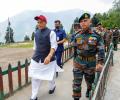
There seems to be a desire for opacity when it comes to confronting China, points out Aakar Patel.

If the government and the political party controlling it want to destroy the homes of people without trial or conviction, where do those people go?, asks Aakar Patel.
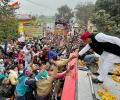
The broad patterns tell us that to sweep UP, the BJP has to retain its voteshares of the past three elections. But to merely win it, the party can do so while losing some voteshare, and perhaps up to as much as 10 per cent, observes Aakar Patel.

The thing is that unemployment and joblessness are a personally felt shame. It is not easy to mobilise a set of people who identify with others as a group that cannot get work, asserts Aakar Patel.

And the only answer one can think of is that this is being done to preserve the image of toughness and 56 inches and all the rest of it, notes Aakar Patel.

The best thing we can pray for is that the courts give a quick judgment in favour of Fundamental Rights so that the government can worry about other things than what it will not let young women wear, hopes Aakar Patel.

Our demonisation and dehumanisation of minorities and especially Muslims is so complete that calls for the abduction of and sexual violence against Muslim girls are acceptable in our society today and can be made in public spaces. The damage we have done to India internally and externally will be lasting, warns Aakar Patel.

After 2014, our growth has been average of around 5%. If this continues, we will remain here like Egypt, Brazil, South Africa and Bangladesh, points out Aakar Patel.
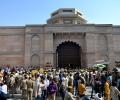
'If we were to change the name of our country officially and become a Hindu Rashtra, will the treatment of Muslims change?' asks Aakar Patel.

When we know that the ED's conviction ratio is less than 1% of the cases that it prosecutes, when we know that ED 'raids' are today more than 25 times as they were before 2014, why are we giving the ED more powers? asks Aakar Patel.

If the prime minister says clearly there is going to be no NRC and that the Census will drop the NPR questions, the Census will proceed. He will not, observes Aakar Patel.
The two actors have slapped legal notices on Mid-Day -- a tabloid in Mumbai -- demanding an unconditional apology for publishing photographs that showed them kissing.

'The wish is that 2022, if not bring us into happier times, at least sees some easing of the pain,' hopes Aakar Patel.

If we have already excluded Muslims from political office by default, and if we are already harassing them daily through laws, like Nazi Germany did and like Pakistan did, then why do we need a Hindu Rashtra or a change from the present set of laws? argues Aakar Patel.

But it is less adventurous. It seems, at last, that in its eighth decade, Pakistan has settled into being a parliamentary democracy just like Bangladesh has and like we have always been, observes Aakar Patel.

A bench of Justices Hrishikesh Roy and S V N Bhatti said it won't issue any clarification on the July 22 order as "We have said what needed to be said in our July 22 order. Can't force anyone to disclose names."
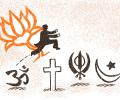
It is unusual in democratic countries two decades into the 21st century for laws to become regressive instead of progressive. But that is clearly what is happening in India today and more of this is ahead, asserts Aakar Patel.

The army has been left to do justice to itself for crimes it is accused of committing against civilians. As a force inside the government, obviously it will want that there be no intrusion into what they do, points out Aakar Patel.

'It is difficult to see how we will be able to get out of the hole that we have dug ourselves into and are digging deeper into,' notes Aakar Patel.

'On the international platform, the prime minister is talking about freedom of speech and he should be ashamed of it'
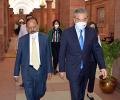
What is it that China seeks and why has the Ladakh border become and remained hot for two years and what is going on in Arunachal Pradesh?, asks Aakar Patel.

The events of the last few years shows that pessimism about where we have arrived and where we are headed is justified, asserts Aakar Patel.

If we have not been world beaters in cricket for the longest time, here is the reason: We look down on our bowlers and deify batsmen, argues Aakar Patel.

The modern world will not accommodate bigotry of the sort India is showing the world today, argues Aakar Patel.

'The burden of the BJP's song is not development and delivery.' 'It is communalism,' argues Aakar Patel.
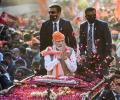
If 'development' and jobs and such things are less important to many than identity, then the BJP can dominate the discourse by stressing the largest marker of identity, which is religious nationalism, observes Aakar Patel.

It is a difficult problem and will require the Union, state governments and civil society, meaning NGOs, to work together, points out Aakar Patel.

To resist external pressure, it could use India's inherent assets and try and make democracy stronger by giving more space to human rights and minority rights, advises Aakar Patel.

What is being exposed is we have no real doctrine and no idea how to deal with the world, asserts Aakar Patel.
